
AXSAHI LIMITED @Certificate No. 80711578
-
Rm 701, Unit 127, 7/F, Tower B, New Mandarin Plaza, 14 Science Museum Road, Tsim Sha Tsui, Hong Kong
The Complete Guide to Taps: Types, Materials & Selection Tips
- On
- InUncategorized
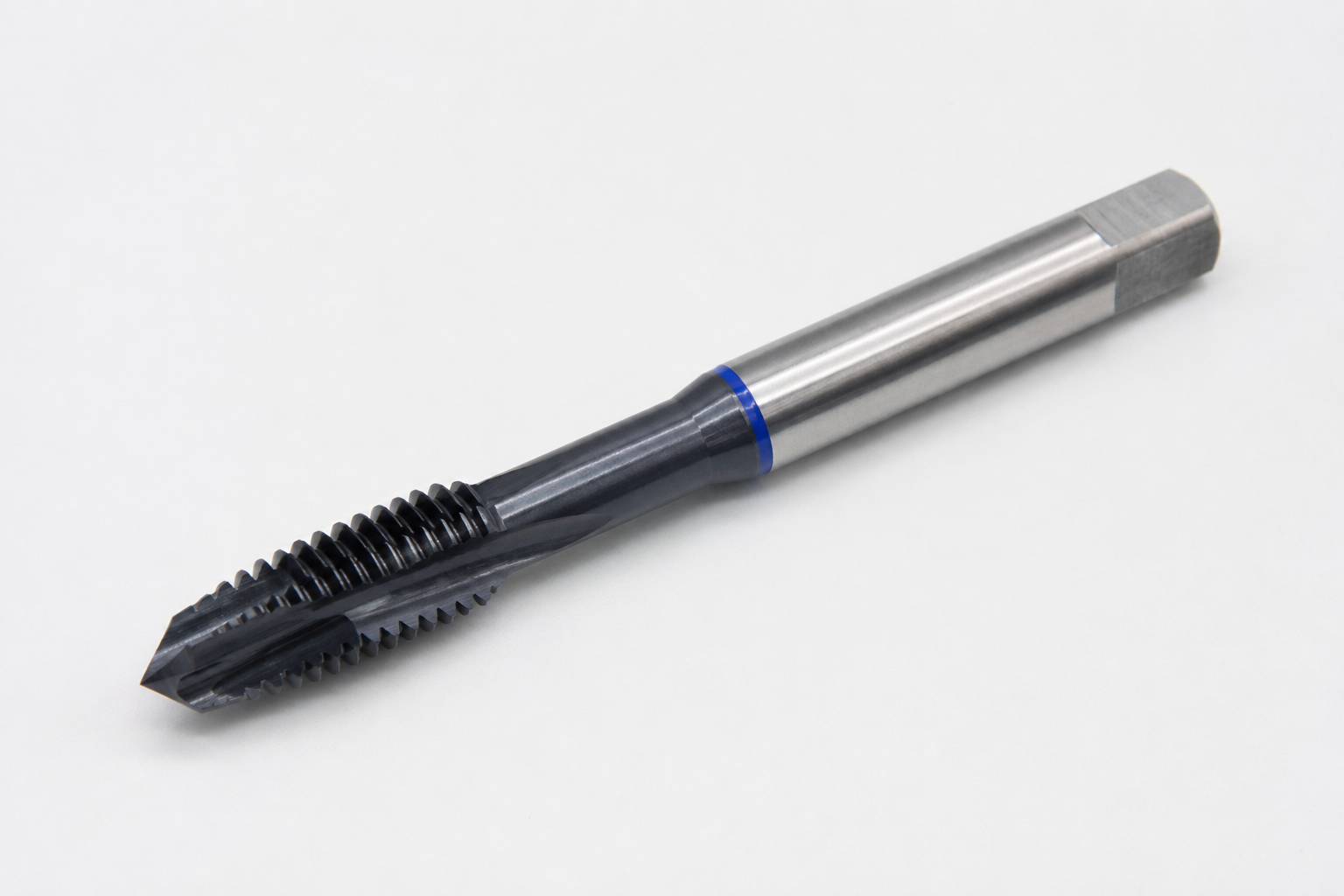
A tap is one of the most essential cutting tools in metalworking, used to create internal threads in a pre-drilled hole. At Axsahi, we manufacture taps spanning M2 to M30 in metric sizes plus UNC, UNF, NPT, and JIS standards — from general-purpose steel taps to specialized taps for stainless steel, cast iron, and hardened materials. This guide walks through how taps work, the main types available, and how to choose the right one for the job.
What Is a Tap
A tap is a cutting or forming tool used to produce internal (female) threads inside a pre-drilled hole. As the tap rotates and advances, its cutting edges — or, in the case of forming taps, its lobed profile — create a thread matching the tap’s specification.
Taps are broadly classified by how they cut (cutting vs. forming/roll taps) and by how they’re driven (hand taps vs. machine taps).
How a Tap Works
A cutting tap uses its tapered leading edge, the chamfer, to guide the tool into the hole and progressively engage material as it rotates. The cutting edges remove material in small chips, cleared through the tap’s flutes. For blind holes, chip evacuation direction matters — the wrong flute type can trap chips and snap the tap.
Forming taps (also called roll taps) work differently: instead of cutting, they displace material through cold plastic deformation, pushing it outward to form the thread. This produces no chips at all, and because the material’s grain structure isn’t cut, the resulting thread is stronger — ideal for ductile materials like aluminum, copper, and low-carbon steel.
Main Types of Taps
By drive method
- Hand taps — typically supplied in sets of three (taper, plug, and bottoming), each removing progressively more material. The taper tap has a long, gradual chamfer for easy starting; the bottoming tap has almost no chamfer and is used to thread close to the bottom of a blind hole.
- Machine taps — designed for drill presses, tapping machines, or CNC machining centers, offering higher speed and consistency for production work.
By flute geometry
- Straight-flute taps — the simplest, most economical design, well suited to through-holes but with limited chip evacuation.
- Spiral-flute taps — flutes are cut at a helix angle that pulls chips back and out of the hole. This is the standard choice for blind holes and gummy, ductile materials.
- Spiral-point (gun-nose) taps — the cutting edge is ground at an angle that pushes chips forward, ahead of the tap. Ideal for through-holes, and widely used on CNC machining centers for fast, reliable tapping.
By forming method
- Cutting taps — remove material to form the thread; suitable for virtually any material.
- Forming/roll taps — cold-form the thread with no chip production, giving higher thread strength and a smoother finish, but requiring more torque and a slightly larger tap drill.
Specialty types include pipe taps (for sealing threads, per standards like DIN 5156) and nut taps for high-volume nut production.
Tap Materials
- HSSE (cobalt-alloyed high-speed steel) — a step up from standard HSS, with added cobalt for improved heat resistance and wear life. This is the workhorse material for most general-purpose taps.
- HSSE-PM (powder-metallurgy high-speed steel) — produced through a powder-metallurgy process that gives a finer, more uniform grain structure, improving toughness and wear resistance, particularly valuable when tapping stainless steel and other hard-to-machine alloys.
- Carbide — the hardest and most wear-resistant of the three, suited to high-volume production and abrasive materials, though more brittle and requiring a rigid machine setup.
Surface coatings make a real difference in tool life:
- TiN (titanium nitride) — a general-purpose gold coating that reduces friction and improves wear resistance.
- TiAlN (titanium aluminum nitride) — a harder, more heat-resistant coating suited to higher-speed operations and tougher materials like stainless steel.
- Steam oxide (black oxide) finish — improves lubricity and helps prevent built-up edge, often used on taps for aluminum and other gummy materials.
Choosing the Right Tap
- Material application group. The industry uses standard letter codes for suitability: P (steel), K (cast iron), N (non-ferrous metals like aluminum and brass), M (stainless steel), and H (hardened steel). Matching the tap to the correct group is the fastest way to narrow down your options.
- Hole type. Through-holes generally call for spiral-point taps, which push chips forward and out. Blind holes need spiral-flute taps, which pull chips back up and out.
- Thread standard and tolerance. Confirm the thread standard — metric per DIN 371/376 and ISO 2, or imperial UNC/UNF, NPT for pipe threads, or JIS — and the tolerance class (commonly 6H for metric) called for on the drawing.
- Tap drill size. An oversized hole produces an incomplete, weaker thread; an undersized hole risks the tap binding or breaking. Always check a tap drill chart or calculate the correct pilot-hole diameter for the thread pitch and desired percentage of thread engagement.
Tips for Tapping Success
- Match speed and feed to the material and tap type — excessive speed accelerates wear and increases the risk of breakage.
- Use cutting fluid. Lubrication reduces friction heat, assists chip evacuation, and extends tap life significantly.
- Clear chips regularly, especially in blind holes — periodic reversal and withdrawal prevents chip packing and tap breakage.
- Keep the tap aligned with the hole axis; misalignment causes uneven loading and can snap the tap or produce a crooked thread.
- Never force a tap through resistance. If you feel significant resistance, back off immediately rather than pushing through.
Care and Storage
Clean taps after use to remove chips and cutting-fluid residue, which can lead to corrosion over time. Store taps in a dedicated tool case or rack so cutting edges don’t knock against each other. For long-term storage, a light coat of rust-preventive oil is good practice.
Final Thoughts
Choosing the right tap — in the right material, flute style, and coating — has a direct impact on tapping efficiency, thread quality, and tool life. At Axsahi, we manufacture taps across the full range covered here: HSSE, HSSE-PM, and carbide, in DIN/ISO, UNC/UNF, NPT, and JIS standards, with TiN, TiAlN, and black-oxide finishes to suit steel, stainless, cast iron, and non-ferrous applications. If you have questions about selecting the right tap for your job, we’re happy to help — get in touch.